What It Means To Be A Buckeye: Maddie Marotti – Ohio State Buckeyes
10/14/2015 12:00:00 AM | Softball
Dec. 6, 2015
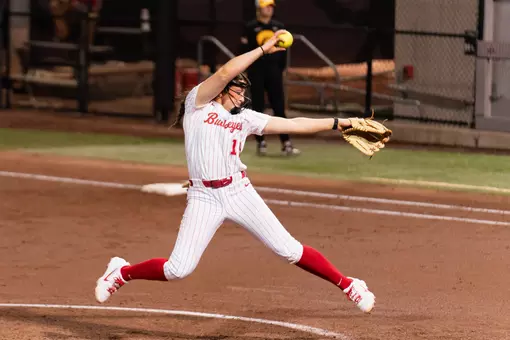
Maddie Marotti grew up in South Bend, Ind. dreaming to someday play softball for the Irish. At age 10, her family moved to Gainesville, Fla. to follow her father, coach Mickey Marotti, as he became the head strength and conditioning coach for the Florida Gators. It was in Florida where Maddie’s passion for softball intensified and she was awarded a scholarship to Notre Dame.
With a wild turn of events during her senior year, the Marotti’s moved to Columbus, Ohio and Maddie began to not feel like herself. “I noticed bruising and little red dots all over my body.” she said. “I also had random nose bleeds and was tired all the time.” After researching her symptoms, Coach Marotti and his wife, Susie, took Maddie to her doctor where they drew blood.
That night, January 11th, 2013, Maddie’s life was changed forever. “I was diagnosed with Idiopathic Thrombocytopenic Purpura (ITP), an incurable autoimmune bleeding disorder,” Maddie said. “My platelets were at 5,000, which was dangerously low. Most people range between 150,000-400,000. I was immediately put on steroids and had to stay in the hospital until my platelets were at a safe level.”
While on medication to prevent bleeding, her numbers stabilized until a month before she was supposed to attend Notre Dame. At that time, her numbers crashed. She talked about her first day of college and said: “I spent it in the hospital receiving an infusion, which entailed six to eight hours of intravenous immunoglobulin, or IVIG. I had to receive these once a week and it was really hard being away from my family. My life revolved around what number my platelets were.”
Some patients with ITP are able to go into remission after these infusions, but Marotti’s body continued to attack itself. After trying every treatment available, she was going to need surgery to have her spleen removed. “When I went home for break I was reminded how nice it was to have the support of my family and doctor. With surgery coming up, I knew I would need to be around them and we began to talk about transferring,” she said.
“Coach Kelly [Kovach Schoenly] immediately reached out to me and wanted to meet. From day one they cared about my health and made sure I understood that softball would always be second to my medical issues. It was so great to feel included; they would visit me in the hospital when they could or text me to check in. I felt like I was a part of the family before I was even on the team,” Marotti said.
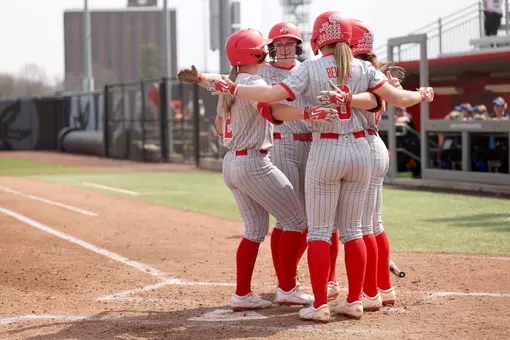
“Being at Ohio State was great for the first fourth months, until my next relapse,” said Marotti. “I had to schedule infusions every other Friday from 12-6 or 8 p.m. In the spring, we would take a red eye home and I would get off the plane and go straight to the hospital. The staff at The James was beyond helpful and willing to work around my school and softball schedule. They always had a bed ready for me, knew me by name – they were just fantastic. I have been in remission since July 2015 but still visit The James for weekly blood drawls. I honestly believe that the softball and football family aspect and how people have rallied around me is why my numbers are better. They may not really understand what exactly I go through, but they’re constantly there for support. Ohio State feels like home now more than ever.”
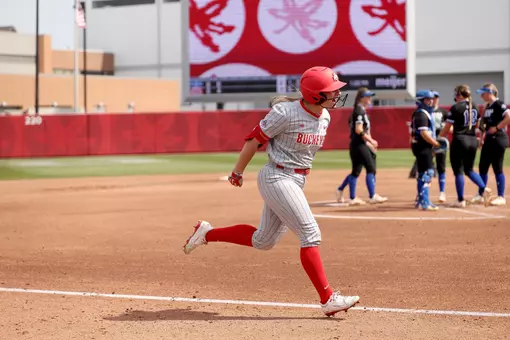
“Maddie is a daily inspiration to her teammates,” said Kovach Schoenly. “She is a tireless worker and has overcome setbacks with her illness and just keeps marching forward. I think because she has had to go through these struggles she appreciates competing for the Buckeyes even more. Watching her play at the highest level now shows the staff and her teammates not to take this experience for granted.”