Softball: Bailey Sees Stadium as Final Frontier – Ohio State Buckeyes
6/30/2008 12:00:00 AM | Softball
New stadium emphasizes contributions of Ohio State’s first women’s basketball coach and athletic administrator
By Brittany Livingston, Ohio State Athletics Communications
COLUMBUS, Ohio Among the crowd that gathered to witness the ground-breaking of the new Buckeye softball stadium June 12 was one individual in-particular especially important to its renovation. Phyllis Bailey, Ohio State’s first women’s basketball coach and administrator, has played a significant role in the progression of women’s athletics over the course of the last 35 years.
According to Bailey, the new stadium has been long overdue and is perhaps one of the final phases in taking Ohio State women’s athletics into the 21st century.
“I think this is a very important link to get finished,” Bailey said. “This facility, although it was nice when I left here, has been very much behind the rest of the institutions. It was time for Ohio State to step up and make it happen.”
Bailey’s first duty as a Buckeye was to serve as an advisor to the Women’s Recreation Association in 1956. Within a year she was selected as Coordinator of Intramurals and Recreation, and the Women’s Sports Program. During this time, the men’s and women’s facilities were far from equal. Within a few years Bailey was named Associate Director of University Recreation and Intramural and Women’s Intercollegiate Sports, but the gender separation continued. During a time of acceptance for gender inequality, Bailey fought hard to make small changes. With her new title she was granted permission to help plan and improve the new women’s program. However, making improvements was far from easy due to the rest of the faculty’s little interest in women’s athletics.
With the adoption of The Education Act of 1972, the infamous Title IX came into play eliminating discrimination on the basis of sex. By 1975, the NCAA confirmed that this also referred to equality of men’s and women’s athletic programs. Ohio State’s Athletic Director at the time, J. Edward “Ed” Weaver had reservations, but complied by promoting Bailey to Assistant Director of Athletics despite bitter feelings from the male faculty members in the Athletic Department. Fighting for an office in St. John Arena and allowing women the right to use the locker and training rooms was among her first few contributions.
“The difficulties in the beginning were that the men were being told what they had to do,” said Bailey. “No one liked being forced to share their budget or find extra facilities for women.”
Changes needed to be made slowly, and Bailey made sure to move with caution. Reassuring the men’s coaches that the women wanted to work with them, not against them, was at the top of her priorities. Due to Bailey’s patience, sense of humor and vigilant preparation, Ohio State was able to move forward under Title IX in the best way possible. It is largely because of Bailey’s actions nearly 35 years ago that Ohio State is able to support and fund the enormous changes we see today in facilities like the softball stadium.
“Since I was here and Title IX came into existence, it has really advanced tremendously,” Bailey added. “All in all, Ohio State has had a couple of great athletic directors before Gene Smith and I who were committed to the fact that yes, this is something that needs to happen and something we need to do. I think the softball stadium is a very important link to get finished. While it has taken a long time, this facility is something that I am extremely pleased to finally see becoming a reality.”
As women became more involved in collegiate athletics, more attention was directed towards balancing graduation rates and recruiting practices. Many female athletes began realizing that the majority of opportunities for continuing in sports lay heavily in collegiate athletics versus professional. Fairness in grant-in-aids was becoming an issue of discussion as well.
“When we first started off with grant-in-aids, the athletic department called me in to discuss how much it was all going to cost,” Bailey said. “They wanted to initially give me 60 half grant-in-aids. I told them I didn’t want them. I told them to get me 30 full. A women’s basketball player, if deserving, should get the same grant-in-aid opportunity as a football player. I wanted to give the women’s coaches 30 full scholarships to do with them as they pleased. I think Ohio State was the only school in the Big Ten Conference to start that way.”
Despite Ed Weaver initially being against the idea, the two eventually saw eye to eye. Bailey’s goal of helping women athletes receive the same benefits as men has continued to become a reality since this time.
“Although we haven’t had as many national championships as we would like to, we are servicing a great many more student-athletes,” Bailey said. “From my point of view, that was more important to make the opportunity available to greater numbers and the rest of it would gradually grow, which it has.”
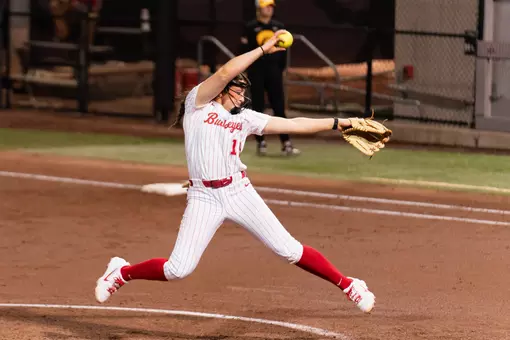
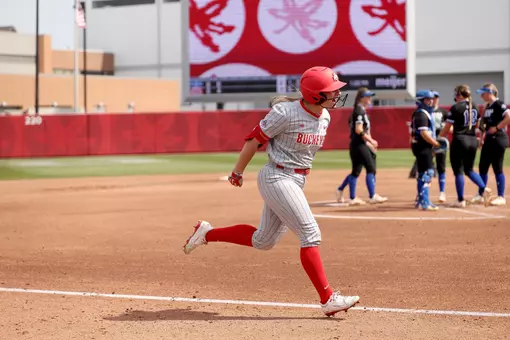
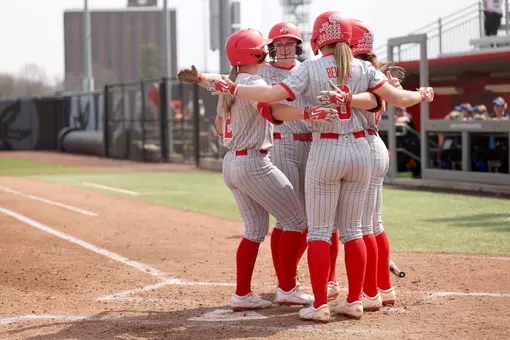
The new softball stadium being built is living proof. The $5.9 million renovation to Buckeye Field began June 9th and is scheduled to wrap up next March when the Buckeyes play their 2009 home opener. This reconstruction, like so many others that have taken place throughout Ohio State’s campus, brings excitement and anticipation of even greater things to come.
“The construction to Buckeye Field is more than just a building for us,” Linda Kalafatis, Ohio State head softball coach, said at the ceremony. “Its pride in knowing that, like so many other facilities on this campus both athletic and academic, we do things the right way. To work out and play in a top facility really brings out the best in the team.”
Sophomore All-American Sam Marder agreed.
“Everyday we just dreamed about it,” Marder said. “The whole team is just so excited and so thankful to all the donors. I think it will be nice for other teams to see just how much this university cares for its student-athletes. The new stadium will definitely bring a new level of excitement to the players.”
Since Bailey’s retirement in 1994, she has seen remarkable improvements in Ohio State athletics. Because of Title IX and efforts from individuals like herself, opportunities for women athletes in higher education, as well as women in athletic administration, have increased dramatically.
“We have the largest number for sports offered for women today and many of them are advancing well up the line,” Bailey stated in regards to Ohio State athletics. “I’d like to say its one of the best in the country.”
### OhioStateBuckeyes.com ###