Finding the Open Road
9/7/2007 12:00:00 AM | Women's Track & Field
Sept. 7, 2007
Ohio State Hall-of-Fame runner Susan Mallery finds acceptance as a Buckeye
by Emily Meyer, Ohio State Athletics Communications
“I always loved running…it was something you could do by yourself and under your own power. You could go in any direction, fast or slow as you wanted, fighting the wind if you felt like it, seeking out new sights just on the strength of your feet and the courage of your lungs.”
– Jesse Owens, Olympic Gold Medalist and Ohio State track and field hall-of-famer (1935-36)
The struggle to be accepted is something all people face at one time or another. As the history of sports shows, those who break convention must first endure the struggle because behind each triumph is a grueling path and behind the glory is the story.
In 1936, Jesse Owens contested Nazi propaganda by capturing four gold medals at the Berlin Olympics. Nearly four decades after Owens defied racial prejudice, Susan Mallery, a 2007 Ohio State Athletics Hall of Fame inductee, began her journey to acceptance by etching her existence as a female athlete into the record books.
Moving with her family to Arlington, Va., in 1969, Mallery left her childhood home of Binghamton, N.Y., and along with it, the opportunity to engage in sports. As Mallery began high school in Virginia, the 14 year-old encountered intolerance she could not have imagined because at the time in Arlington, a woman’s position in the world still rested in the domestic sphere female athletes simply did not exist.
“It was completely off the radar for girls to be running,” Mallery said. “Running for me has always been about self-validation and confidence. I feel it is good to be strong and mentally tough, but during that time in Virginia it wasn’t encouraged. Instead, I had girls in my class making their debuts to society and preparing to go to finishing school.”
The great leap from a progressive upstate New York to Virginia was a culture shock for Mallery as the teen was not used to participating in a gym class where girls learned to curtsey.
Unaccustomed and unwilling to believe women should shun athletic endeavors, Mallery took two buses to Washington, D.C., a 45-minute commute each way, to train with the Amateur Athletic Union (AAU) team as a high school junior.
That year, Mallery set a Virginia state record, running a 2:19:30 half-mile, a time that stood for nearly 20 years and was completely ignored. No mention or recognition of this accomplishment was noted in the local or school paper.
“It was a major hassle to train with the AAU team because of the commute,” Mallery said. “It would have been much easier if I could have competed at my high school where I could walk out my door and be at practice.
“That is what triggered me to go out for the boys’ team my senior year,” Mallery said. “I trained all summer and by the time the season came around in the fall, I had earned the third spot on the boys’ varsity team but I was not allowed to race because of my gender. The coach was understanding and still let me run with them I just couldn’t compete.”
After four years of being denied the chance to represent her school as an athlete, Mallery already knew she wanted to attend a university that offered both a good learning and athletic experience.
“That’s when Ohio State really came to the forefront,” Mallery said. “Women’s cross country and outdoor track were varsity sports. We didn’t have scholarships but it was a varsity sport so we had nice locker rooms and took trips. In a way it was nice we weren’t on scholarship because we ran for the love of the sport.”
At Ohio State, Mallery found the opportunity she had searched for while attending high school in Virginia. She found an institution where she could train and compete as a respected athlete. As a freshman, Mallery thrived making both the junior varsity basketball and varsity track teams.
“I really loved basketball but my only experience was playing ‘pick-up games’ with the boys in Virginia,” Mallery said. “Since I had no formal coaching for basketball, it became apparent I was going to be better at running than basketball by my second year. It was stellar just to finally be part of a team.”
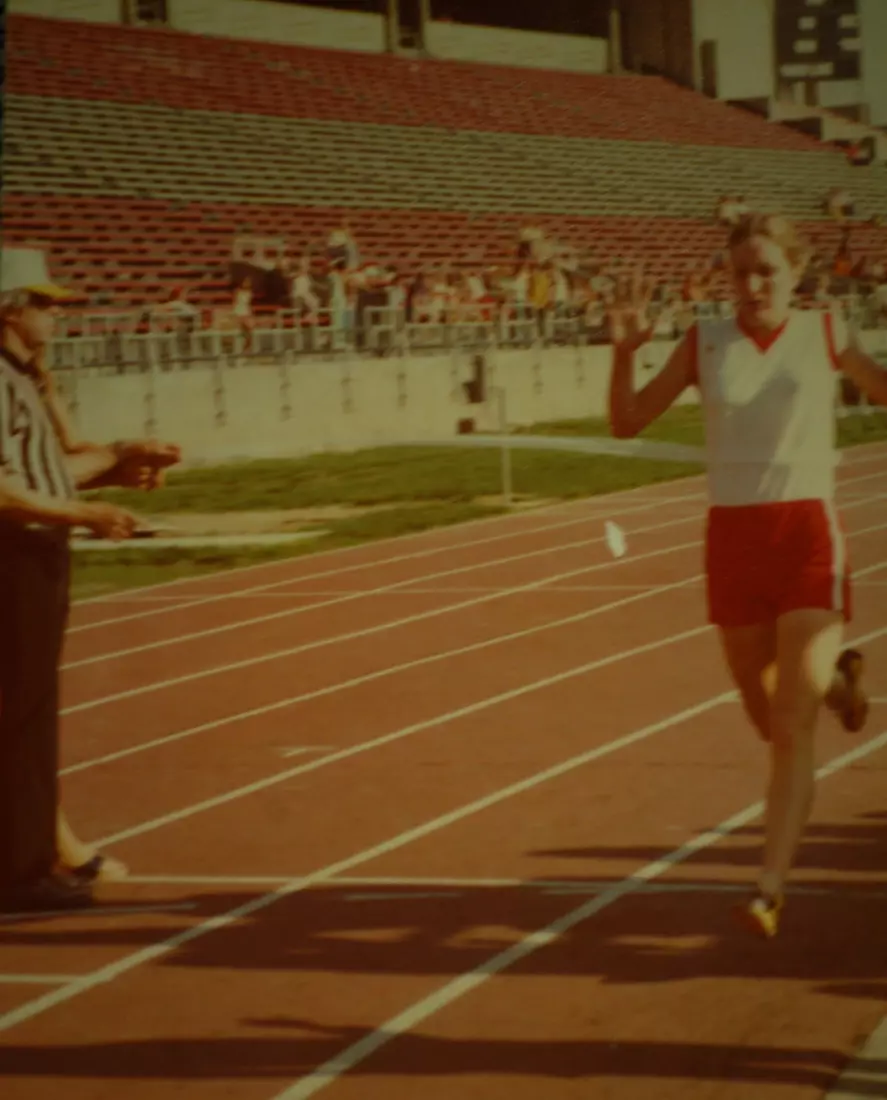
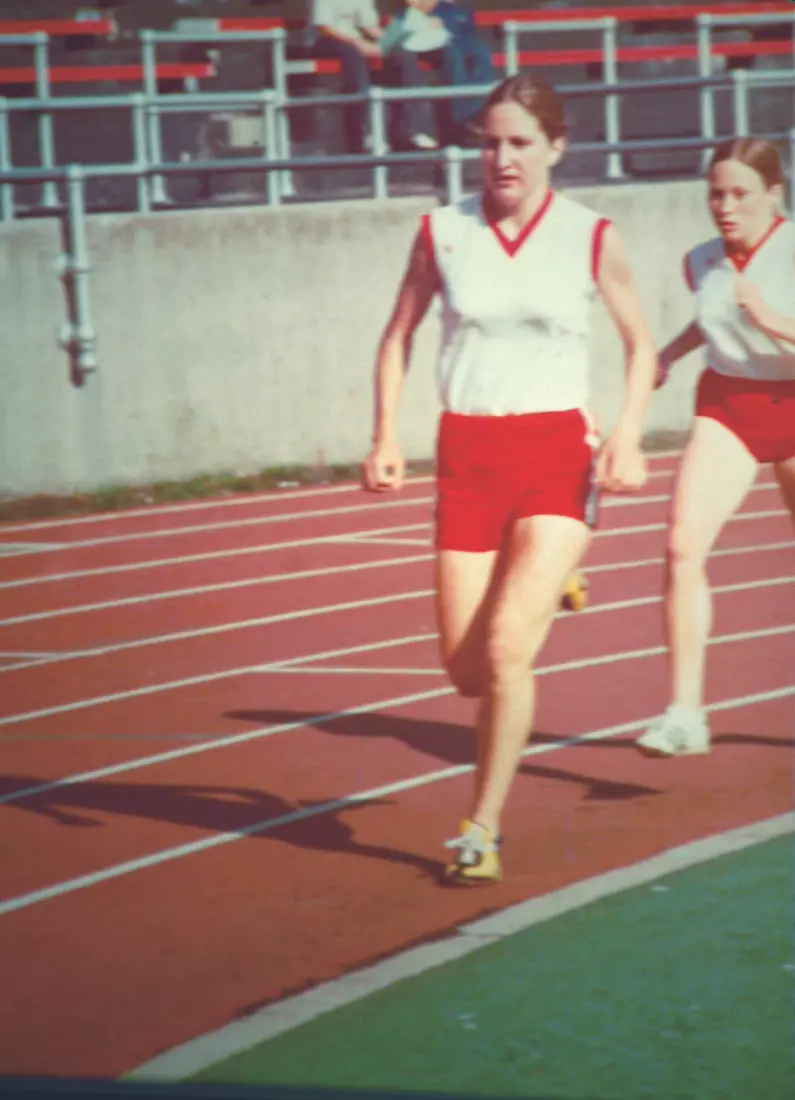
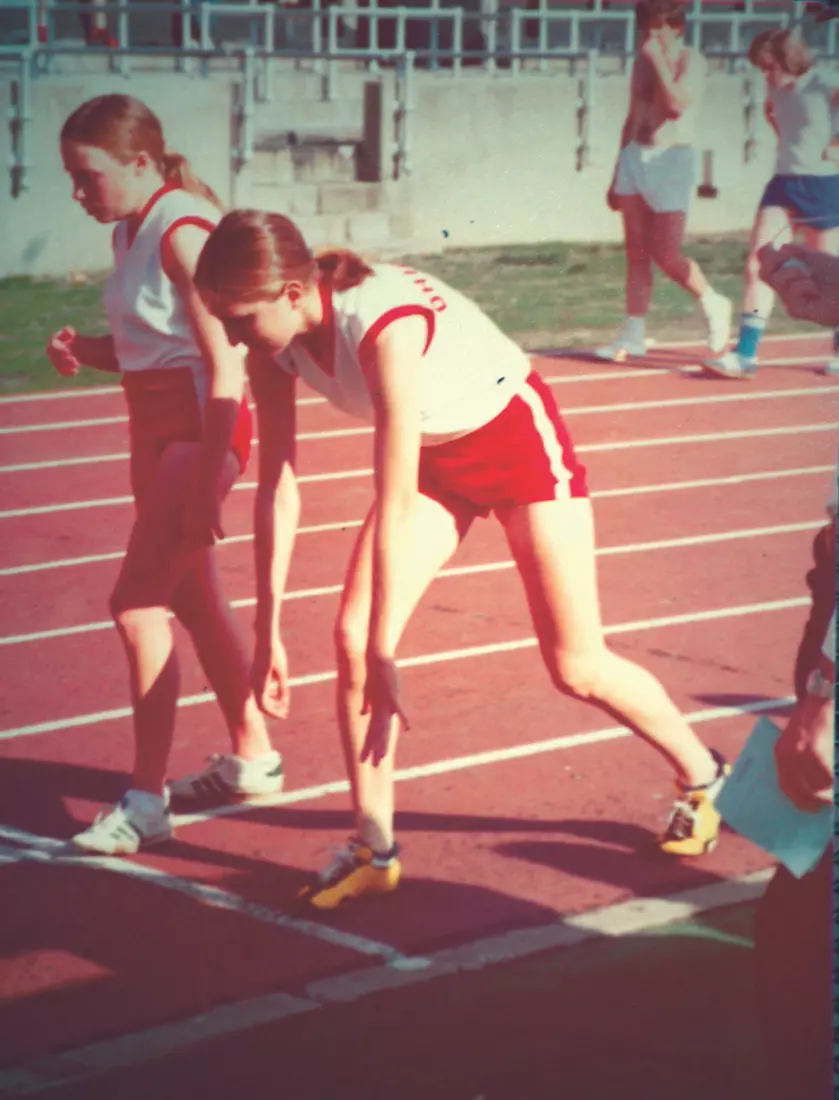
Training under a converted fencing coach, Kit Boesh, Mallery competed for the Buckeyes from 1973-76 and served as co-captain of Ohio State’s women’s track team her sophomore, junior and senior years and captain of the first women’s cross country team as a senior. As a Buckeye, she collected three Top 10 finishes at the Association for Intercollegiate Athletics for Women (AIAW) national meets (the predecessor of the NCAA championships) and finished second in the 3-mile at the inaugural Women’s Big Ten Track and Field Championships in 1976.
While Boesh was not an expert on running, her dedication to the team was apparent.
“Kit knew her limitations,” Mallery said. “So she would listen to suggestions. Our volunteer assistant coach John Merola was a professor in physiological chemistry at Ohio State so he understood the exercise physiology that went behind running.
“No matter what, Kit would be out there rain or shine timing us or during cross country training she would be out following us in a golf cart at Scarlet and Gray (Ohio State’s golf courses).”
Reflecting on her career at Ohio State, Mallery recalls the thrill of running for the Buckeyes.
“It was tremendous competing at Ohio Stadium because it was a great place to have your fans come,” Mallery said. “The interesting thing about its track was the fact that the surface was terrible. It gave us a real home advantage because we knew where all the holes were. It was just a classic track because it’s where (Jesse) Owens ran.”
Her time as a Buckeye gave Mallery an escape from the traditional lifestyle she experienced in Arlington, finding support for women in athletics from both professors and Phyllis Bailey, Ohio State’s first senior women’s athletics administrator who worked for the Buckeyes from 1956-95, first as a coach and later as an administrator.
“I had professors who were incredibly supportive if I had to miss a class because of meets,” Mallery said. “They were really good about letting me make up work or take an exam early. I even had some professors interested in what I was doing which was flattering for an 18-year-old kid.”
While Mallery and her teammates ran with no scholarship opportunities, it was Bailey’s initiative that led to the development of scholarships for women’s cross country and track for the 1976-77 season.
“Phyllis Bailey was wonderful,” Mallery said. “It was because of her guidance and leadership women’s athletics blossomed. At Ohio State, women’s athletics started as club sports and she helped mature them into nationally recognized varsity programs. It was during her tenure women’s sports started to gain equality.”
After her career in college athletics was completed, Mallery went on to win the women’s division of the Marine Corps Marathon in Washington D.C., in 1976 and ’77, wins which served as a statement to her ability as a runner in the place she found so much resistance as an inspiring athlete.
“I delivered the Washington Post as a side job in high school,” Mallery said. “And they wouldn’t let me put my name as the carrier because they had never had a girl deliver the paper before. Instead, I could only put my initials. So when I ran and won the Marine Corps Marathon it was a great personal validation to prove as a female I could not only run 26.2 miles but also finish in the top 10 percent of the entire field.”
Through running, Mallery found the strength and confidence to rise above critics who disapproved of women crossing over to the athletic arena. Her determination not only garnered her success on the track but also has led her to a leadership role in oral cancer research.
In all, Mallery collected four degrees, including her doctorate, from Ohio State where she is now a tenured professor in the College of Dentistry. At the university, she juggles her time between teaching, seeing patients and conducting research. Currently, Mallery is partnered with OSU researchers Drs. Peter Larsen and Gary Stoner and University of North Carolina’s Dr. Russell Mumper as the team is testing the effects of treating precancerous oral lesions with a bioadhesive gel containing freeze-dried black raspberries.
“One of the most thrilling things we are doing right now is we are actually taking our findings to a cancer prevention clinical trial,” Mallery said. “It’s rewarding because I’ve spent so many years of my life at the bench to learn about what would work best and now we actually get to take it forward to a patient population.”
Still running and swimming daily, the energized professor has grown accustomed to her life in the Midwest.
“Obviously, I like the Midwest,” Mallery said. “The opportunities for women were wonderful when I moved to Columbus. Now, I’ve lived in Ohio longer than I’ve lived anywhere else in my lifetime.
“The people, both the students and my patients, are extremely sincere. Ohio State students have a great rapport with their professors which is a reflection of themselves. I’m so lucky.”
Yet luck does not have much to do with it. Mallery faced and conquered the challenges in her life and now is garnering the respect she deserves. Like famed track and field star Jesse Owens, running was something Mallery loved because it was something she could do for herself, in her own time. And with physical and mental strength, the Ohio State Athletics Hall of Famer found the courage to defy the standards and run beyond the barriers.